Message From The Principal’s Desk
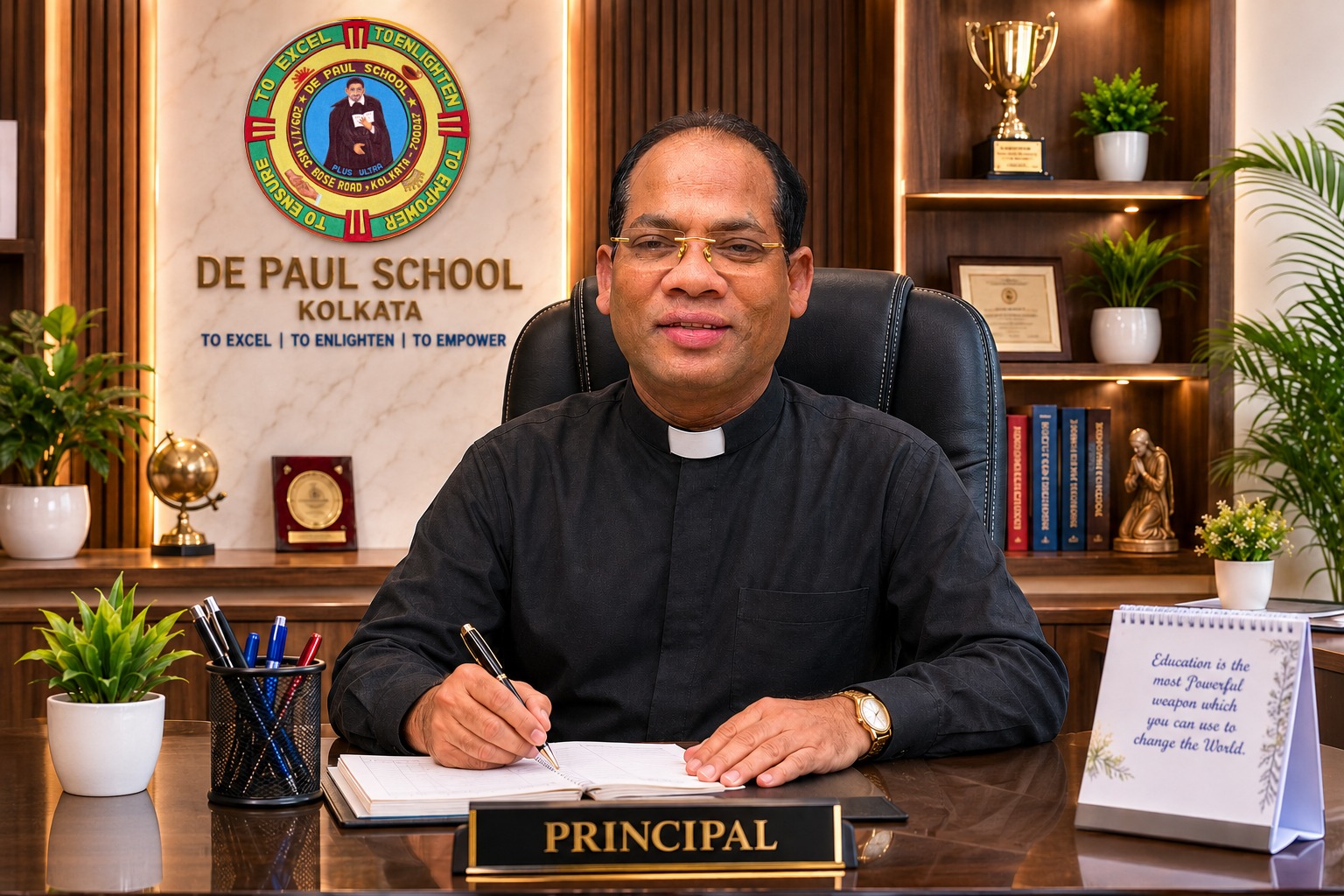
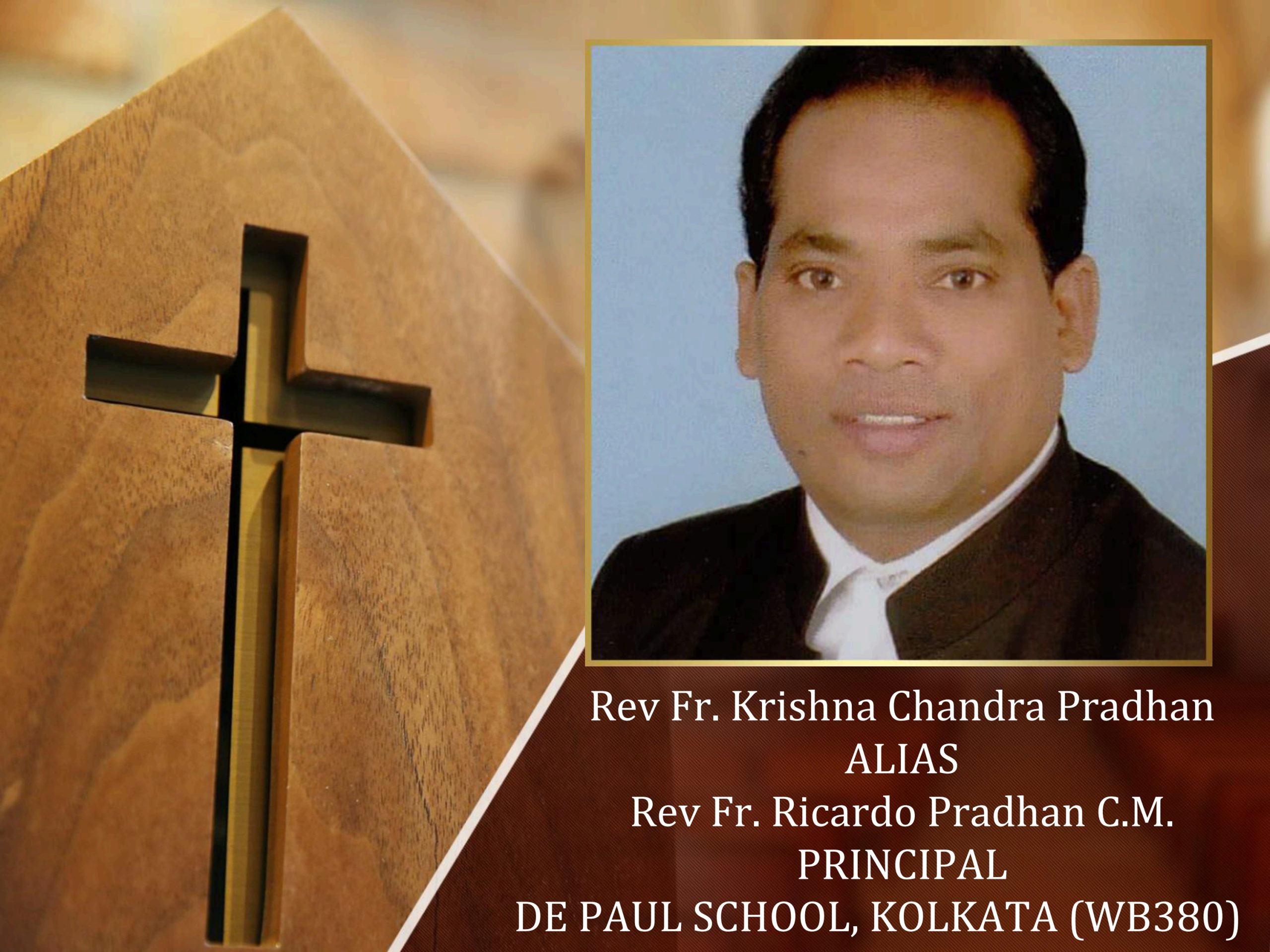
REV. FR. RICARDO PRADHAN, CM
In Conversation with Our Principal
Rev. Fr. Ricardo Pradhan Principal, De Paul School, Kolkata
1. Describe your vision for De Paul School in the upcoming session.
VISION: TO CULTIVATE AN ENRICHING EDUCATIONAL ENVIRONMENT, INSTILL CORE VALUES, AND INSPIRE THE YOUNG MINDS OF OUR NATION TO EMERGE AS GLOBAL LEADERS.
The contemporary world is undergoing profound and often cataclysmic transformations, leaving many students feeling overwhelmed and unsettled. Mindful of this reality, my objective is to foster a sanctuary of learning that prioritizes the inculcation of fundamental human values. By doing so, we aim to mould our students into individuals of noble character, guided by a spirit of universal fraternity. We are committed to establishing a safe, nurturing, and conducive atmosphere that prioritizes both their holistic well-being and academic growth.
2. As the new Principal of De Paul School, how do you intend to foster relationships of trust and collaboration with staff, parents, and students?
RELATIONSHIP OF TRUST: EMBRACING THE PRACTICAL AND CONSTRUCTIVE CONTRIBUTIONS OF PARENTS WHENEVER FEASIBLE.
Collaboration is the cornerstone of every triumph. As a premier institution, De Paul School has established a distinguished benchmark and a venerable reputation in the field of education. To sustain and elevate this trajectory of excellence, I shall judiciously and with humility observe the challenges and impediments faced by our community. To the best of my ability, I seek to resolve these concerns through individual consultations with the management and the dedicated staff who have been the bedrock of the De Paul family for many years.
3. Please describe the role you believe parents should play in the operation of the school.
THE SHARED RESPONSIBILITY: IT IS THE COLLECTIVE DUTY OF BOTH PARENTS AND THE SCHOOL TO NURTURE EACH CHILD WITH COMPASSION AND SENSITIVITY.
For a student, school serves as a secondary home; therefore, it is imperative that parents and educators unite in a collaborative effort to nurture the child with profound care. In the seamless operation of our institution, parents play an indispensable role by sharing their valuable insights, resources, and counsel. Wherever possible, these practical perspectives and collective wisdom will be integrated into our school’s practices.
4. How do you plan to cultivate a positive school culture or climate?
POSITIVE SCHOOL CULTURE: MAINTAINING IMPARTIALITY, PRACTISING ACTIVE LISTENING, ENCOURAGING OPEN DIALOGUE, AND UPHOLDING JUSTICE.
As an administrator, my primary objective is to cultivate an ethos of positivity that encourages an optimistic outlook and meticulous planning. A well-conceived strategy will be employed to address emerging issues effortlessly. Throughout this endeavour, I shall remain an impartial and just leader—a sound listener who encourages frequent and unfettered interaction across the school community.
5. Would you allow students to offer their opinions before making important decisions that impact their daily routines?
ROOM FOR CONSIDERATION: ATTENTIVELY LISTENING TO OUR STUDENTS, AS THEIR GENUINE PERSPECTIVES ARE OF PARAMOUNT IMPORTANCE.
I shall always welcome and value the constructive opinions of our students. When necessary, I will deliberate on these insights with the faculty and management before implementing significant decisions. Ultimately, honouring the student voice is essential to their personal growth and the progress of the student body at large.
6. What are your primary goals for the coming year?
GOALS: PRIORITIZING ACADEMIC EXCELLENCE, HOLISTIC GROWTH, AND THE MAINTENANCE OF EXEMPLARY DISCIPLINE.
The fundamental duty of a capable administrator is to focus on the academic advancement and the comprehensive development of every student. By instilling rigorous discipline and enduring values, we prepare each student to take their place as a responsible citizen of the world.
7. How would you engage parents as active participants in their children’s education?
PRACTICAL ENGAGEMENT: INVOLVING PARENTS THROUGH REGULAR CONSULTATIONS AND COMMEMORATIVE EVENTS.
The involvement of parents in the school’s life is always encouraged. I intend to engage them as active partners through regular parent-teacher interactions and by inviting them to participate in special occasions and school functions. This ongoing partnership will further enrich their contribution to the flourishing of every child.
8. What motivates you in your vocation?
MOTIVATION: A PROFOUND AFFECTION FOR CHILDREN, A COMMITMENT TO THEIR INTELLECTUAL EVOLUTION, AND THE DESIRE TO UNLOCK THEIR HIDDEN POTENTIAL.
Reflecting on the nature of childhood, Jess Lair eloquently stated, “Children are not things to be moulded, but are people to be unfolded.” Children are the very essence of life—pure, innocent, and symbolic of hope, endowed with an inexhaustible reservoir of potential. I am driven by a deep love for them and a passion for their educational journey. Furthermore, the steadfast support of our management, staff, and parents provides me with the immense inspiration required to lead this institution toward a brighter future. I am confident to function with dedication and effectuate necessary changes within the system, adapting to the evolving demands of our time.
9. How would you describe your leadership style?
LEADERSHIP STYLE: CHARACTERIZED BY WELL-STRUCTURED PLANNING, FIRMNESS IN PRINCIPLE, FAIRNESS IN JUDGEMENT, ACTIVE LISTENING, AND AN IMPARTIAL OUTLOOK.
As the head of this institution, my approach will be firm yet fair. I prioritize being an active listener and an impartial decision-maker. As an effective leader must be, I will remain approachable, fostering an environment where views, ideas, suggestions, and concerns can be freely shared. I will take all necessary measures to cultivate an energetic, enthusiastic, and progressive workplace that encourages exemplary teamwork.
10. How would you rate yourself as a disciplinarian?
ON DISCIPLINE: VIEWING DISCIPLINE AS VITAL; GUIDED BY A BACKGROUND OF RIGOROUS TRAINING TO ACT WITH PRECISION.
Discipline is the very lifeblood of my approach. Coming from a background of rigorous training as a priest, I am naturally propelled towards seeking perfection in my actions. I will carry this same standard into my role as an administrator. Without discipline, life becomes errant and wayward—a reality we cannot accept when tasked with the delicate responsibility of nurturing the future citizens of India and the world.
11. How do you empower students to become better leaders?
EMPOWERMENT PARAMETERS: ENTRUSTING ROLES AND RESPONSIBILITIES, OFFERING TRUST AND GUIDANCE, AND PROVIDING OPPORTUNITIES FOR SELF-DEVELOPMENT.
Every student is born with inherent talents and leadership qualities; when given the opportunity, these traits can be cultivated to guide them toward unexpected heights and their true destiny. I aim to empower students by entrusting them with various roles and responsibilities. By placing trust in their capabilities and providing essential guidance so they do not stray, we offer them ample opportunities to develop their leadership potential through diverse events and occasions.
12. According to you, how does teacher evaluation correspond to student achievement?
INDICATORS OF EFFICACY: A TEACHER’S EFFECTIVENESS IS REFLECTED IN THE CONSISTENT ACHIEVEMENT AND SUCCESS OF THEIR STUDENTS ACROSS VARIOUS FIELDS.
The consistent achievements and successes of students across different fields are the true indicators of a teacher’s efficacy. A single word of encouragement, positive reinforcement, and the right motivation can work wonders in a student’s life, regardless of their age. Students always look forward to those tokens of appreciation, and that positive reinforcement can make all the difference. As Carl Jung aptly observed, “One looks back with appreciation to the brilliant teachers, but with gratitude to those who touched our human feelings.” The curriculum provides much of the necessary raw material, but warmth is the vital element for the growing plant and for the soul of the child.” To this, I would add: “I have come to believe that a great teacher is a great artist, and that there are as few as there are any other great artists. Teaching might even be the greatest of the arts since the medium is the human mind and spirit.” Teachers are, in essence, the architects of tomorrow’s humanity; therefore, a teacher must be an individual of profound substance and depth.
13. How would you bridge the gap between advantaged and disadvantaged students?
BRIDGING THE GAP: DEVOTING SPECIAL ATTENTION TO SPECIFIC ECONOMIC NEEDS, OFFERING CONCESSIONS, IMPLEMENTING REMEDIAL STUDY MEASURES, AND CULTIVATING AN ENVIRONMENT OF ENCOURAGEMENT.
The most effective way to bridge the divide between advantaged and disadvantaged students is to provide them with focused attention and viable concessions, such as dedicated study hours. It is imperative to motivate and encourage these students to navigate the realities of their circumstances with resilience. This endeavour will be undertaken with unwavering dedication and faith, akin to the parable of ‘bringing the lost sheep back into the fold.’
14. What new services or activities do you wish to establish in the school?
NEW ENDEAVORS: ESTABLISHING PIONEERING GOALS IN THE REALM OF SOCIAL SERVICE.
I envision instituting new benchmarks of achievement for students, teachers, and parents alike, ensuring that our entire community ascends to unprecedented heights of progress and success. Earnest efforts will be directed toward introducing initiatives such as social service programmes. By inviting external organizations and forming collaborative teams of doctors and counsellors from within our parent body, we aim to instill the noble value of charity. This will foster the holistic growth and development of the mind, health, and soul of every individual.
15. What measures would you take to increase the school’s involvement with the community?
COMMUNITY MEASURES: FACILITATING SOCIAL INITIATIVES AMONG THE ELDERLY, MARGINALIZED POPULATIONS, SLUM HABITATS, HOSPITALS, AND VARIOUS HUMANITARIAN ORGANIZATIONS.
The children of today are destined to be the responsible citizens and community leaders of tomorrow. Consequently, it is the paramount duty of this institution to intimately familiarize them with their societal surroundings. To this end, I will facilitate social service engagements catering to the elderly and the marginalized, as well as outreach in slum developments, hospitals, and other humanitarian organizations, thereby addressing the pressing needs of our contemporary society.